
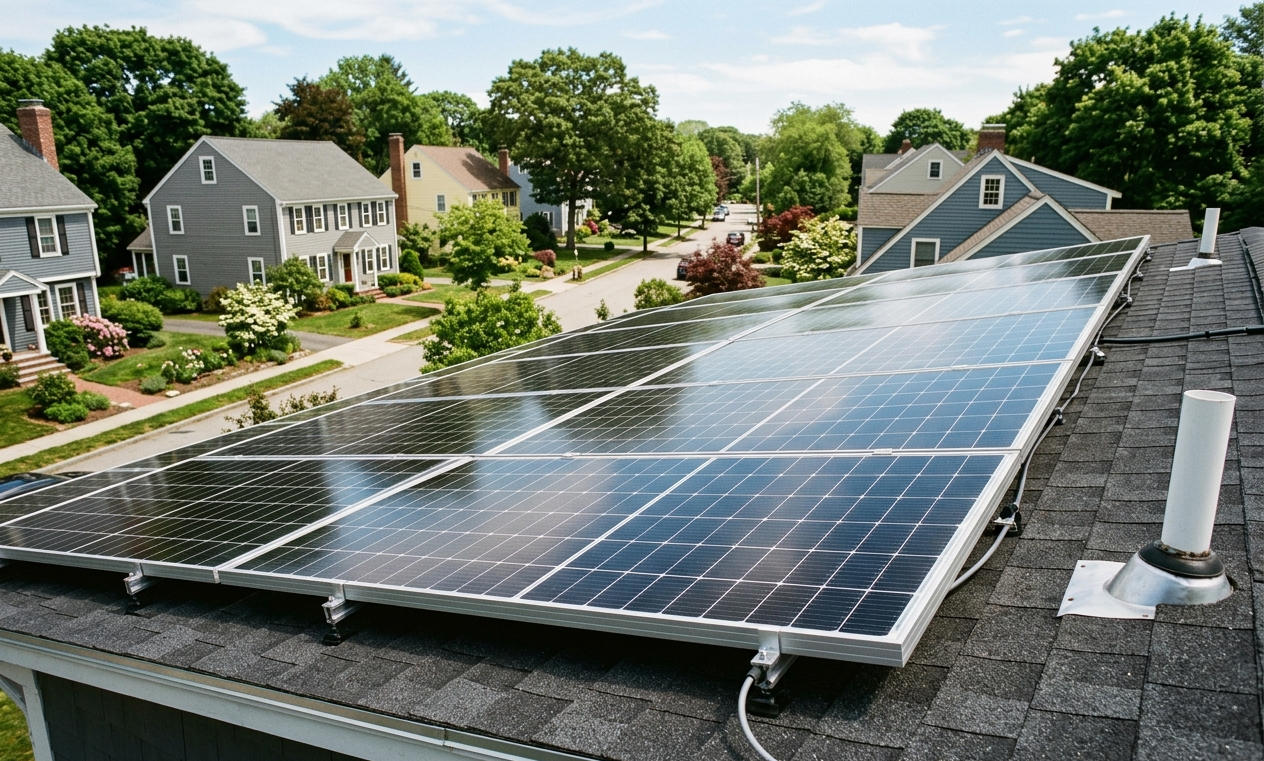
Taxpayers considering installing solar panels at facilities used in a trade, business, or other for‑profit activity should act promptly. The One Big, Beautiful Bill Act (OBBA), enacted in July 2025, accelerated the phase‑out of many clean energy incentives but preserved the 30% investment tax credit (ITC) and certain bonus credit increases. To qualify, solar facilities must begin construction by July 4, 2026, and be placed in service by December 31, 2027. The OBBA also introduces immediate write‑off options. Projects that start after the deadline will face stricter requirements to remain eligible for energy tax credits.
The OBBBA made significant changes to the federal solar energy credits, including the Clean Electricity Investment Credit (IRC § 48E). The new rules apply to investments in qualified clean electricity property, including solar, placed in service after December 31, 2024.
Taxpayers that install solar panels may benefit from both federal and state energy tax incentives. For instance, taxpayers in New Jersey may combine the benefits from the federal 30% ITC and possible bonus credits with New Jersey State energy tax incentives, which will continue after the expiration of the OBBBA clean energy incentives.
The following is a description of some of these federal and New Jersey energy tax benefits, some of their limitations, and what steps to take to maximize their benefits.
I. OBBBA New Rules
A. On or Before July 4, 2026 Deadline
Construction of the solar facilities must begin on or before July 4, 2026 to qualify for the 30% ITC and certain bonus credit increases under IRC § 48E without being subject to the accelerated placed-in-service deadline imposed by the OBBBA. If construction of the solar facilities begins on or before July 4, 2026, the facilities are not subject to a 30% ITC termination date and certain bonus credit increases remain available to them, provided the facilities are placed in service by December 31, 2027. However, for construction of the solar facilities that begin on or before July 4, 2026, the placed in service deadline of December 31, 2027 can be extended to four years after the facilities’ construction start date if the requirements of the continuity safe harbor rules are met.
On the other hand, if construction of the solar facilities begins after July 4, 2026 and they are placed in service after December 31, 2027, the solar facilities will not be eligible for the 30% ITC and certain bonus credit increases, without any extension provided to this placed-in-service deadline by the continuity safe harbor rules.
This means the special rule that disallows the 30% ITC and certain bonus credit increases for solar facilities placed in service after December 31, 2027, does not apply to facilities for which construction begins on or before July 4, 2026. The December 31, 2027 placed-in-service deadline only applies to solar facilities with a construction start date after July 4, 2026.
B. Physical Work Test
For most solar facilities, the sole method to establish that construction has begun on or before July 4, 2026, is the Physical Work Test. This requires that “physical work of a significant nature” (not preliminary activities) has commenced, either on-site (e.g., installation of racks or structures to affix PV panels) or off-site (e.g., manufacture of components under a binding contract). For solar facilities with a maximum net output of not greater than 1.5 megawatts (AC), a taxpayer may establish that construction has begun before on or before July 4, 2026, by either the Physical Work Test, or the Five Percent Safe Harbor by incurring at least 5% of total project costs.
C. Continuity Safe Harbor Rules
Projects that start on or before July 4, 2026 generally have four years to be completed under “continuity safe harbor” rules. These rules provide that if the facilities are placed in service by the end of the fourth calendar year, after the year in which construction began, the continuity requirement is deemed satisfied. If not, whether the requirement is met is determined by facts and circumstances, with certain excusable delays allowed. The four-year continuity safe harbor is not a requirement, but an optional means to automatically satisfy the continuity requirement. There is no rule that mandates the facilities must be completed within four years because the four-year period is a safe harbor and not a strict deadline.
By contrast, projects beginning construction after July 4, 2026 must be fully operational by December 31, 2027 to qualify for the 30% ITC and certain bonus credit increases.
II. Federal Tax Benefits
A. Federal Tax Credits
- 30% ITC (IRC § 48E)
IRC § 48E, which is effective for property placed in service after December 31, 2024, provides a 30% ITC for the basis of “qualified property” that is part of a “qualified facility,” which is one used for the generation of electricity with zero or negative greenhouse gas emissions, or of energy storage technology. The base rate is 6%, but this increases to 30% if prevailing wage and apprenticeship requirements are satisfied, or if the project is under 1 MW or begins construction by July 4, 2026. In practical terms, taxpayers may claim a dollar‑for‑dollar federal tax reduction equal to 30% of total project costs under the current favorable terms, provided construction begins no later than July 4, 2026. - Bonus Credit Increases
- Domestic Content Bonus: Projects that meet domestic content requirements (i.e., using U.S.-produced steel, iron, or manufactured products) receive an additional 2% (base) or 10% (alternative) credit increase.
- Energy Community Bonus: Projects located in designated “energy communities” (such as brownfields, areas with fossil fuel employment, coal closure census tracts) receive an additional 2% (base) or 10% (alternative) credit increase.
- Low-Income Community Bonus: For solar facilities under 5 MW placed in service in low income communities or on Indian land, the credit is increased by 1% points. For qualified low-income residential building projects or economic benefit projects the increase is 20% points.
- Stacking of Bonus Credits
Bonus credits can be combined. For example, a project meeting wage and/or apprenticeship, domestic content, energy community, and low-income community criteria could qualify for a total credit rate of up to 70% of eligible basis for certain projects.
- Accelerated Depreciation
Taxpayers may depreciate the cost of solar property under the Modified Accelerated Cost Recovery System (MACRS) during the first year it is placed in service if certain requirements are met. This accelerated depreciation reduces taxable income and improves immediate cash flow.
- Inclusion of Interconnection Costs
For solar projects with a maximum net output of not exceeding 5 megawatts as measured in alternating current, the expenses for qualified interconnection property can be included in the eligible basis for the 30% ITC.
- Elective Direct Payment and Transferability
Certain taxpayers may elect to receive the ITC as a direct payment or transfer by sale the credit to another taxpayer in a tax-free transaction, increasing flexibility and financial benefit. Tax-exempt organizations (e.g., schools, local governments, etc.) can now receive the ITC as a direct cash payment from the IRS rather than a tax deduction.
- Eligibility for Advanced Energy Project Credits
Taxpayers investing in manufacturing or recycling facilities for solar property may qualify for the IRC § 48C advanced energy project credit, which provides a 30% credit for eligible investments, subject to allocation limits.
III. Some Limitations on Federal Tax Credits
A. Bonus credits for low-income communities are subject to annual capacity limitations and require application and allocation from the IRS and Department of Energy.
B. The OBBBA introduced new restrictions, effective for construction beginning after December 31, 2025, including the denial of credits for projects with material assistance from prohibited foreign entities and for certain leasing arrangements, and the banning of credit transfers to specified foreign entities.
IV. New Jersey Tax Benefits
A. Property Tax Exemption for Renewable Energy Systems
New Jersey law provides a property tax exemption for certain qualifying renewable energy systems, including solar panels. The exemption is equal to the increase in assessed property value resulting from the installation of the renewable energy system. To qualify, the system must be certified by the local construction code official, and the exemption is calculated as the difference between the total assessed value of the property before and after installation. That is, installing solar panels will not increase the property tax assessment on the taxpayer’s commercial property due to the value added by the solar system.
B. Sales and Use Tax Exemption
New Jersey provides a full exemption from state sales and use tax for the purchase of solar energy equipment. Accordingly, taxpayers do not pay sales tax on solar panels, inverters, and other qualifying components used in solar energy systems.
C. Net Metering
New Jersey’s net metering rules allow taxpayers to receive credit on their utility bills for excess electricity generated by their solar panels and exported to the grid.
D. Renewable Portfolio Standard (RPS) and Solar Renewable Energy Certificates (SRECs, TRECs, SREC-IIs)
New Jersey maintains an ambitious Renewable Portfolio Standard, requiring electricity suppliers to include a minimum percentage of renewable energy in their sales. For energy years after OBBBA, the RPS continues to increase, with specific obligations for solar energy (SRECs, TRECs, SREC-IIs) that are set as a percentage of retail electricity sales. Taxpayers with qualifying solar installations can generate and sell these certificates, creating a direct financial benefit. The RPS schedule shows increasing requirements for solar and other renewables through at least 2032, which ensures ongoing demand for solar-generated RECs.
E. Eligibility for SREC-II and TREC Programs
Even after the closure of the original SREC program, New Jersey has established successor programs, such as SREC-II and TREC, for new solar installations. These programs allow new solar projects to generate and sell certificates for a defined qualification life.
F. Potential for Local Abatements and Exemptions
Certain types of real estate properties may receive from some New Jersey municipalities additional property tax abatements or exemptions for up to five years if they are subject to improvements involving renewable energy systems such a solar panel installations.
G. Continued Participation in State Clean Energy Programs
New Jersey’s Clean Energy Program emphasizes on supporting solar energy deployment, including technical support, streamlined interconnection, regulatory support, and incentive programs.
We will continue to keep you updated on these important developments, but please contact your MSPC advisor in the interval should you have any questions.